For much of my life, I focused on caring for my family. I’m a mom of two and a stepmom to two more, and like many others, my own health often came second. In 2020, my friends and I made a decision to start taking better care of ourselves. That decision changed everything for me.
I had my first physical in years at the end of 2019, and the results were not what I expected. My blood work came back abnormal, and I was eventually diagnosed with metabolic dysfunction-associated steatohepatitis (MASH). What started as a routine check quickly became the beginning of a much more complicated health journey.
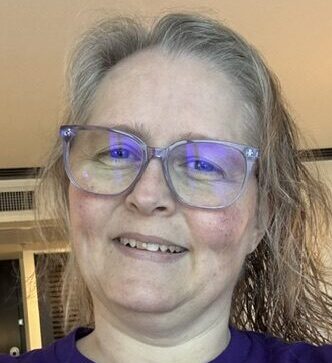
Early on, I was approached by my doctors and asked if I was interested in clinical trials. I told the doctors that I was willing to do anything to help find a cure since there weren’t any medications for NASH/MASH on the market. I quickly realized that navigating the healthcare system is not always straightforward. While there are many dedicated clinicians, I learned that it is important to make sure you feel heard and supported. I had to take an active role in understanding my condition, advocate for myself, and find the right care team for me.
Through my journey in advocating for my own health, I discovered that I also have Alpha-1 Antitrypsin Deficiency (AATD), a genetic condition that affects the liver and lungs. Combined with MASH, this accelerated my disease progression and eventually led to cirrhosis. That experience reinforced for me how important it is to ask questions, seek second opinions, and connect with specialists who understand complex conditions.
I became more involved in the patient community, including working with the Alpha-1 Foundation and attending GLI’s Advanced Advocacy Academy (A3). At the time, I was the only pre-transplant patient there, which was both intimidating and empowering. I built connections, learned from others, and continued to educate myself. When there were delays in my transplant process, I took matters into my own hands by organizing and submitting my medical records to ensure my care continued smoothly between Duke and Mayo Clinic.
One thing I have learned is that you have to be your own advocate. If something doesn’t feel right, it’s okay to ask more questions or seek another opinion. You can’t rely on assumptions alone. The more you understand about your condition, the better equipped you are to make informed decisions about your care.
I also believe strongly that patients need better access to clear, digestible information. Too often, people leave appointments without fully understanding their diagnosis or next steps. There is also still stigma, especially among older generations, that makes it harder to talk openly about health. We need to change that.
My journey has not been easy, but it has shown me that patients have more power than they may realize. By staying informed, asking questions, and speaking up, you can play an active role in your care and your future.
