
Global Liver Institute’s Beyond the Biopsy (BTB) initiative aims to promote the widespread adoption of non-invasive diagnostics to address the rapidly growing epidemic of fatty liver disease. While liver biopsies have their role, noninvasive options offer safer, more readily accessible ways to assess liver health. As non-invasive technologies and pharmacological advances continue, GLI is expanding BTB to develop strategies for use in primary care, community clinics, emergency departments, and rural and remote healthcare settings.
Goals
- Increased Adoption of Noninvasive Diagnostics: Wider use of noninvasive diagnostic tools, leading to earlier detection and intervention
- Improved Patient Outcomes: Reduced progression to severe liver disease and improved management of MASLD/MASH
- Cost Savings: Decreased healthcare costs by minimizing the need for invasive procedures and advanced treatments
- Global Impact: Improved liver health in regions with high rates of cardiometabolic risk factors, obesity, and limited access to care
The GLI Solution
Elevate Awareness, Research Data, Drive Paradigm Shifts
Key Components
1. Patient-Centered Focus:
Prioritize improving patient outcomes by involving patients and caregivers in program development and decision-making
2. Innovative Research Initiatives:
Support research and clinical trials to validate the effectiveness of noninvasive diagnostic technologies for MASLD/MASH detection and management
3. Education and Awareness Campaigns:
Develop targeted campaigns to raise awareness of MASLD/MASH, cardiometabolics, and noninvasive diagnostics through digital platforms, community outreach, and media partnerships
4. Stakeholder Collaboration:
Foster partnerships with healthcare providers, researchers, and advocacy groups, guided by advisory boards to align with industry standards
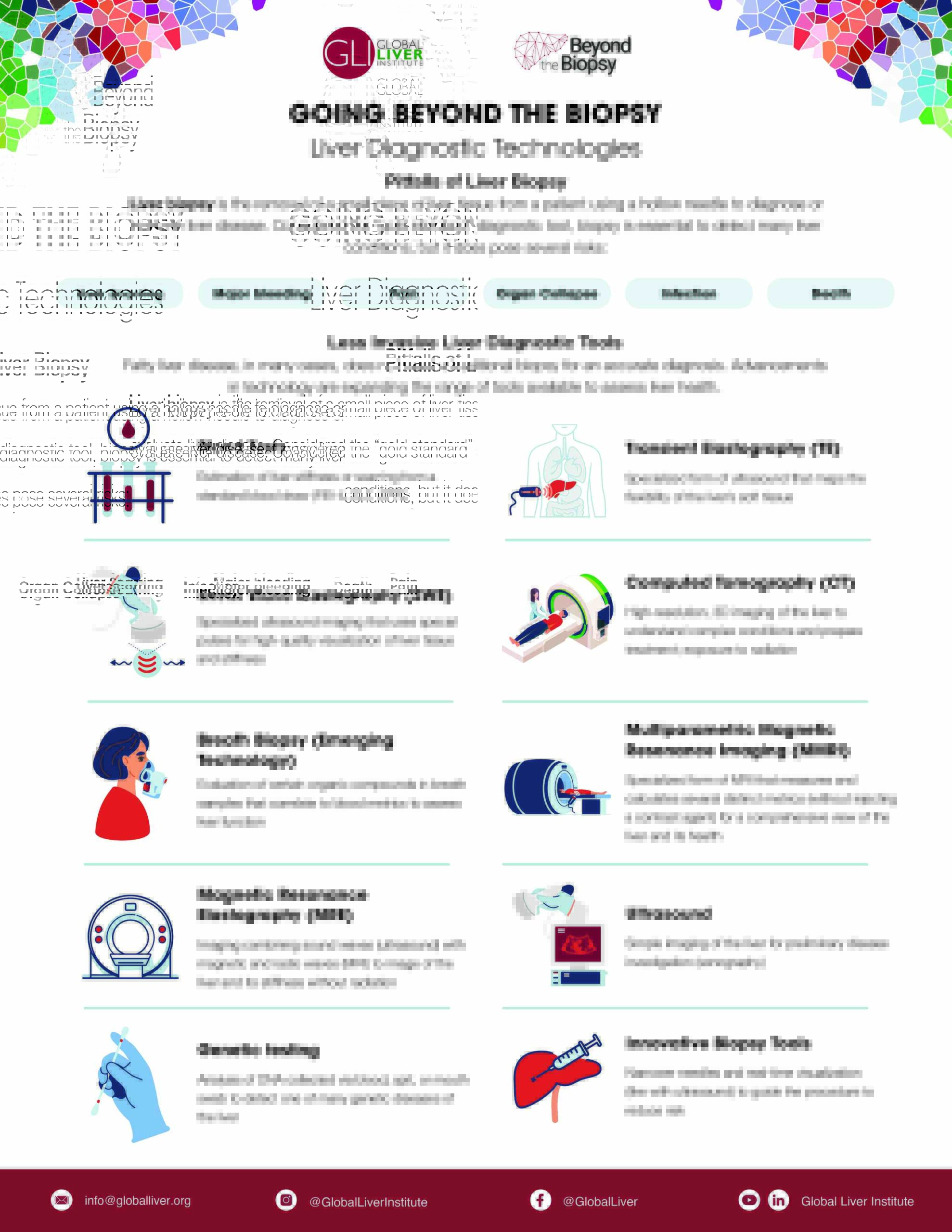
Going Beyond the Biopsy – Liver Diagnostic Technologies
Pitfalls of Liver Biopsy
The diagnosis and management of liver diseases rely on a spectrum of tests and technologies, each offering unique insights into the organ’s structure, function, and health. From simple blood tests to sophisticated imaging and genetic analysis, these tools enable early detection, accurate diagnosis, and tailored treatment strategies that improve patient outcomes. Ongoing advances in non-invasive diagnostics and innovative biopsy technologies are transforming the field of liver disease, ushering in an era of precision medicine and individualized care.