

The United States is currently experiencing a significant, nationwide obesity epidemic that is associated with numerous long-term health concerns; in particular, two groups that suffer from this growing issue are children and adolescents. Childhood obesity is generally defined as having a body mass index (BMI) at or above the 95th percentile for a child’s age and sex. Since the 1970s, the prevalence of overweight children (children with a BMI between the 85th and 95th percentiles) has tripled; similarly, in 2023, the trend continued with 1 in 5 children being identified as obese (Iyun et al., 2024). Childhood obesity can lead to several long-term health consequences, including cardiovascular, metabolic, liver, and mental health conditions. To evaluate this ongoing issue, it is important to address the environmental factors that influence these trends. Socioeconomic status plays an integral role in childhood nutrition and health by affecting income, food insecurity, social support, nutrition education, and access to healthcare. This literature review will summarize the literature on the causes and consequences of childhood obesity, how socioeconomic status affects children’s nutrition, and potential strategies on how to address this issue.
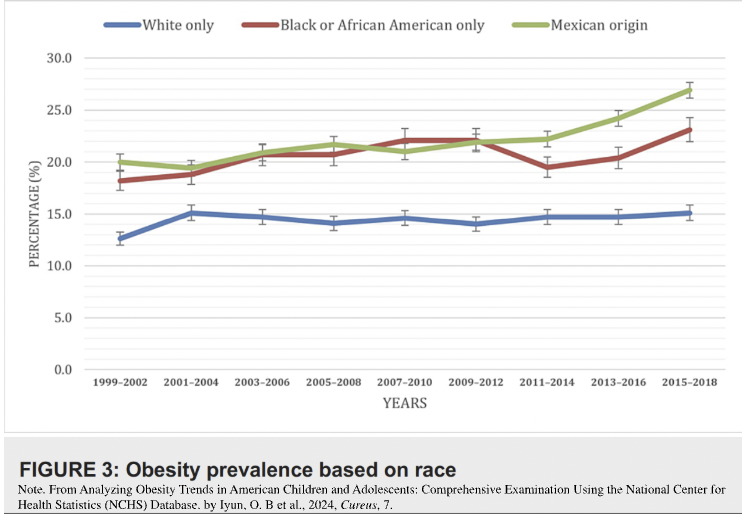
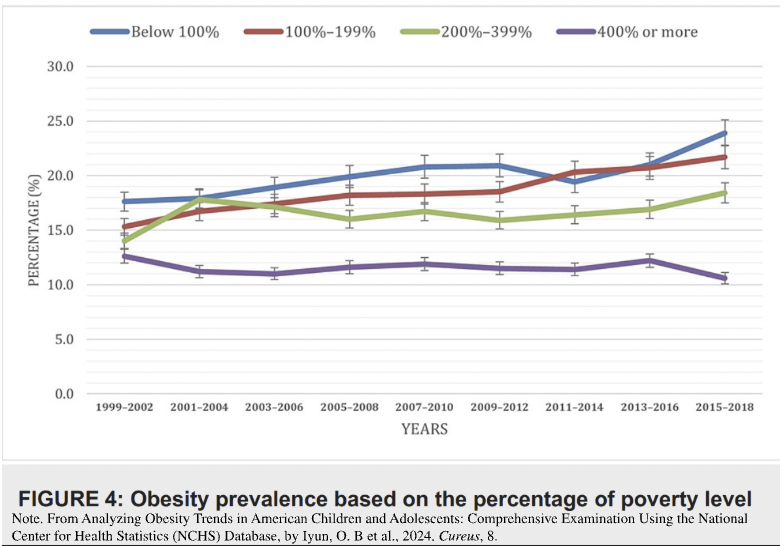
Childhood obesity occurs when there is a buildup of excess body fat to a point that impairs the health and development of a child. Childhood obesity can disrupt many bodily processes, resulting in inflammation, dysfunction of hormones, gut microbiota changes, and insulin resistance (Iyun et al., 2024). These alterations could negatively affect the health of a child while also increasing their risk of developing a chronic disease later in life. These risks could include type 2 diabetes, metabolic dysfunction-associated steatotic liver disease (MASLD), cardiovascular disease, high cholesterol, sleep apnea, and orthopedic problems (Sahoo et al., 2015). Metabolic health is closely connected to liver health, and children with metabolic risk factors may be at increased risk of developing MASLD, which can progress to more advanced liver disease, including metabolic dysfunction-associated steatohepatitis (MASH). In addition to physical health, obesity can have significant impacts on children’s mental well-being. Children with obesity are more prone to teasing, bullying, and discrimination, which could cause psychological problems; obesity is often described as a highly stigmatizing state to be in during childhood (Sahoo et al., 2015). With this being said, it is important to acknowledge that childhood obesity does not impact all populations equally. In recent years, the general pattern observed in high-income countries, such as the US, indicates a plateau in overall childhood obesity; however, the rates for some ethnic minority groups continued to rise (Vazquez & Cubbin, 2020). Additionally, children from low-income households show consistently higher obesity rates than children from high-income households (Iyun et al., 2024). These inequities underscore the importance of examining more than just the behavioral habits of children with obesity; it is also essential to inspect the social and environmental factors that shape their lives.
The quality of a child’s nutrition is highly dependent on their socioeconomic status (SES), which can include factors such as their household income, access to nutritious foods, nutrition education and healthcare. The conversation surrounding low SES and low-income families should also consider marginalized ethnic and racial groups, as socioeconomic disparities often intersect with those of minority groups. For instance, statistics highlight that obesity rates in children range from 22 to 36% in Native American, Pacific Islander, Hispanic, and Black children; in contrast, White and Asian children have rates of only 14% and 11%, respectively (Vazquez & Cubbin, 2020).
Similar socioeconomic trends can be seen by examining poverty level; studies indicate that an increased prevalence of obesity is consistently observed among families below 100% of the poverty level (Iyun et al., 2024). Children from impoverished families can experience several barriers to healthy nutrition, including food insecurity, limited access to nutritious foods, heavier reliance on cheap, low-quality meals, and lack of nutrition literacy and education. Unfortunately, the broader food environment fuels these discrepancies by targeting children with cheap, calorically dense, and highly palatable options using advertisements and marketing.
The frequent consumption of soft drinks and fast food has been noted to be highly associated with child adiposity (Davis et al., 2007); these items are inexpensive and palatable to young children; thus, low-income families face difficulties controlling the nutrients entering their children’s body. Environmental and socioeconomic factors are persistent in fueling the childhood obesity epidemic, and it is imperative that solutions are created to address these ongoing issues.
Because childhood obesity rates depend on more than just individual behaviors, it is important to consider the underlying environmental and social inequities when formulating effective strategies for prevention. The design and development of communities in the United States have taken a toll on children’s physical activity levels, as the addition of man-made buildings can make neighborhoods too crowded, unsafe, and heavily reliant on vehicle transportation. Because of this, children with less access to physical activity in their neighborhoods are at greater risk of becoming obese, with access being even more limited in lower-income communities of color. To fix this issue, children’s healthcare providers can support efforts to preserve parks, advocate for development initiatives like walking and bicycle paths, and encourage families to use local physical activity options available to them (Davis et al., 2007). Additionally, obesity interventions may be less successful with groups of lower SES if socioeconomic barriers are not properly addressed. For children living with obesity, family-centered interventions and supportive approaches should be considered. For instance, family meals are highly associated with higher intakes of fruits, vegetables, milk, and other micronutrients and lower intakes of fried food and soft drinks (Davis et al., 2007). Additionally, expanding access to programs like the Supplemental Nutrition Assistance Program (SNAP), which gives money to low-income families for groceries, and the Expanded Food and Nutrition Education Program (EFNEP), which provides free nutritional education to low-income families and youth, could address financial barriers to quality nutrition. Despite the goals of these programs, it is important for interventions to remain culturally sensitive without disrupting families’ customs and traditions; an intervention may be scientifically sound; however, if it does not fit the lived experience of the child, then it could risk failure (Vazquez & Cubbin, 2020). The most effective strategies are the ones that account for the socioeconomic circumstances faced by the families of children living with obesity, reinforcing community-based solutions and efforts towards preventing childhood obesity and improving long-term health and well-being.
The childhood obesity epidemic has brought with it many challenges both in the short and long term. Growing up living with obesity can increase the risk of developing chronic diseases, highlighting the importance of early, supportive approaches to prevention and management. Resolving this issue involves addressing the complexities of which populations are affected by this epidemic the most. Therefore, implementing strategies based on socioeconomic disparities is essential, as it provides a more comprehensive understanding of the childhood obesity epidemic. Addressing the root causes of childhood obesity, including social, environmental, and economic factors, can support efforts to prevent chronic diseases from developing later in adulthood.
Sources
Davis, M. M., Gance-Cleveland, B., Hassink, S., Johnson, R., Paradis, G., & Resnicow, K. (2007). Recommendations for Prevention of Childhood Obesity. Pediatrics, 120(Supplement 4), S229–S253. American Academy of Pediatrics. https://doi.org/10.1542/peds.2007-2329e
Iyun, O. B., Okobi, O. E., Nwachukwu, E. U., Miranda, W., Osemwegie, N. O., Igbadumhe, R., Olawoye, A., Oragui, C. C., & Osagwu, N. A. (2024). Analyzing obesity trends in American children and adolescents: Comprehensive examination using the National Center for Health Statistics (NCHS) database. Cureus. https://doi.org/10.7759/cureus.61825
Marmot, M. (2005). Social determinants of health inequalities. The Lancet, 365(9464), 1099–1104. https://doi.org/10.1016/s0140-6736(05)71146-6
Must, A., & Strauss, R. (1999). Risks and consequences of childhood and adolescent obesity. International Journal of Obesity, 23(S2), S2–S11. https://doi.org/10.1038/sj.ijo.0800852
Sahoo, K., Sahoo, B., Choudhury, A. K., Sofi, N. Y., Kumar, R., & Bhadoria, A. S. (2015). Childhood obesity: Causes and consequences. Journal of Family Medicine and Primary Care, 4(2), 187. https://doi.org/10.4103/2249-4863.154628
Smith, R., Kelly, B., Yeatman, H., & Boyland, E. (2019). Food marketing influences children’s attitudes, preferences and consumption: A systematic critical review. Nutrients, 11(4), 875. MDPI. https://doi.org/10.3390/nu11040875
Vazquez, C. E., & Cubbin, C. (2020). Socioeconomic status and childhood obesity: A review of literature from the past decade to inform intervention research. Current Obesity Reports, 9(4). Springer Nature Link. https://doi.org/10.1007/s13679-020-00400-2
